Jul 30, 2026Buying Guides
Why Do We Choose Multiple Wavelengths Instead of Just One?
Red Light + Infrared: Lightens Fine Lines and Improves Skin Tone Blue Light: Reduces Inflammation and Treats Acne Yellow Light: Soothes Sensitive Skin
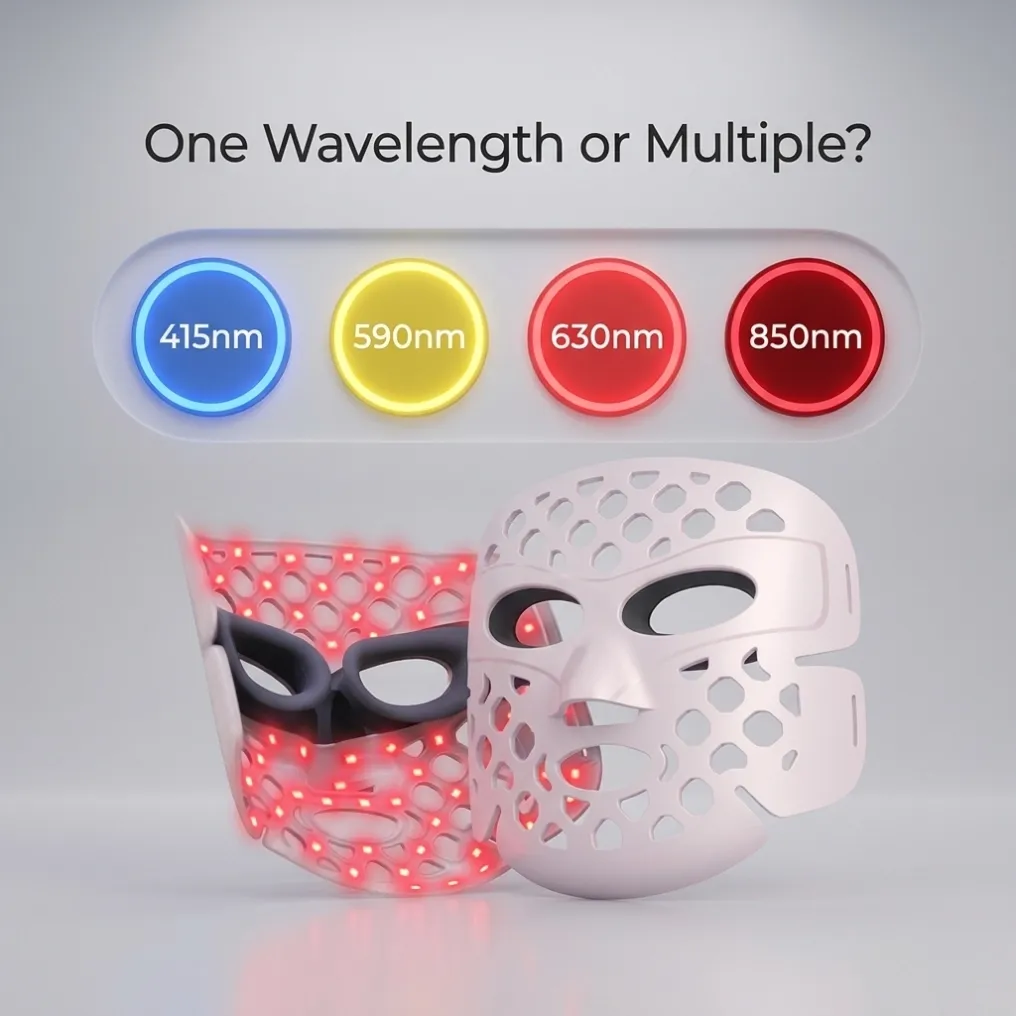
Why Do We Choose Multiple Wavelengths Instead of Just One?
One question we often hear is:
"If red light works so well, why not use only one high-performance wavelength?"
It's a great question.
The answer lies in how different wavelengths interact with the skin.
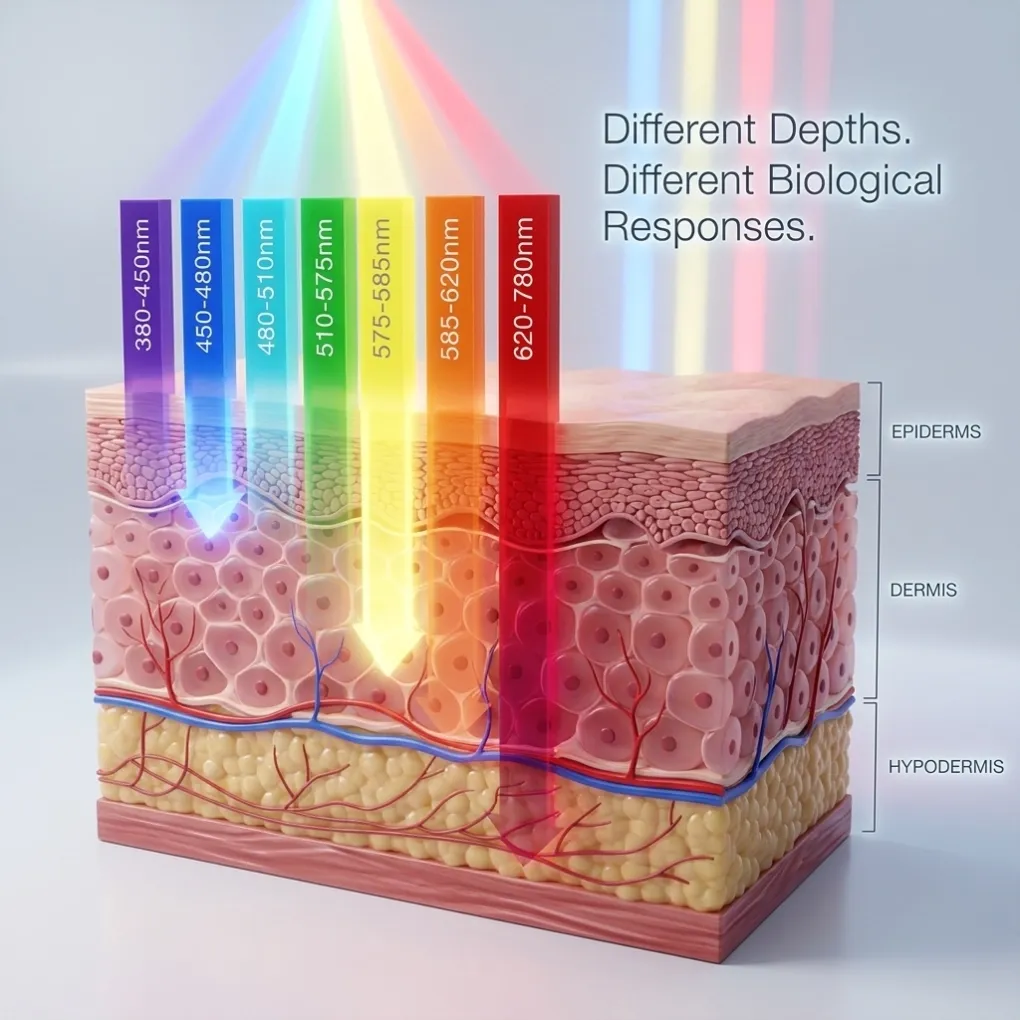
630nm Red Light
Supports collagen production and helps improve the appearance of fine lines.
415nm Blue Light
Targets acne-causing bacteria and is commonly used for blemish-prone skin.
590nm Yellow Light
Helps improve the appearance of uneven skin tone and supports a brighter-looking complexion.
850nm Near-Infrared Light
Penetrates deeper into tissue than visible light and is widely studied for supporting tissue recovery and skin rejuvenation.
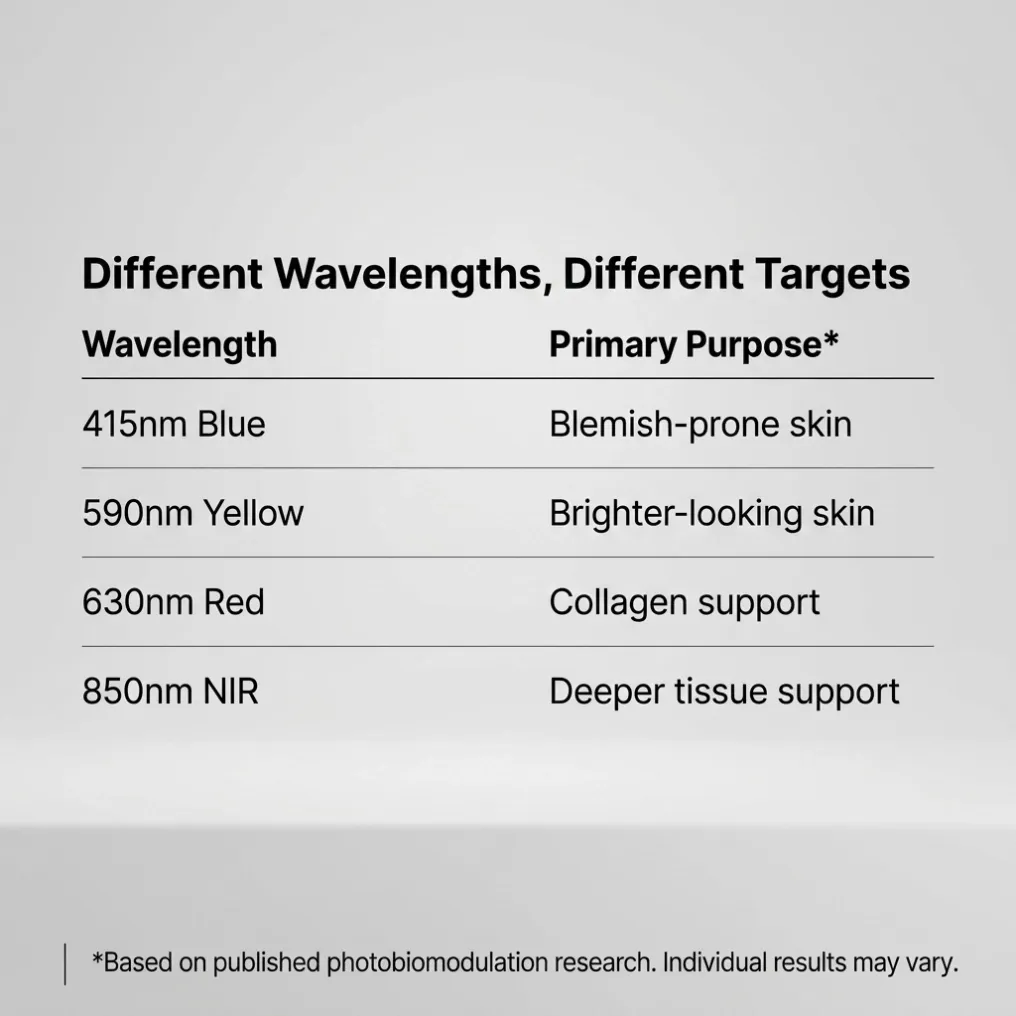
Each wavelength has a different depth of penetration and biological target.
Instead of asking,
"Which wavelength is the best?"
A better question is:
"Which skin concern are you trying to address?"
That's why many professional LED light therapy devices combine multiple clinically studied wavelengths—to provide greater flexibility for different skincare needs, rather than relying on a single solution.
At the end of the day, it's not about having more LEDs. It's about delivering the right wavelength, at the right irradiance, in a well-designed treatment protocol.
If you were developing an LED beauty device, would you choose a single wavelength or a multi-wavelength system?
I'd love to hear your thoughts.