Sep 10, 2026Buying Guides
Clean Workshop for Beauty Device Manufacturing | OEM Factory
See why a clean, controlled production environment matters when manufacturing LED masks and home beauty devices for OEM and private label brands.
Why a Clean Production Environment Matters for Home Beauty Device Manufacturing
When international beauty brands evaluate a new OEM/ODM manufacturer, product specifications and pricing are usually the first things discussed.
But during an on-site factory visit, buyers often notice something else:
the production environment.
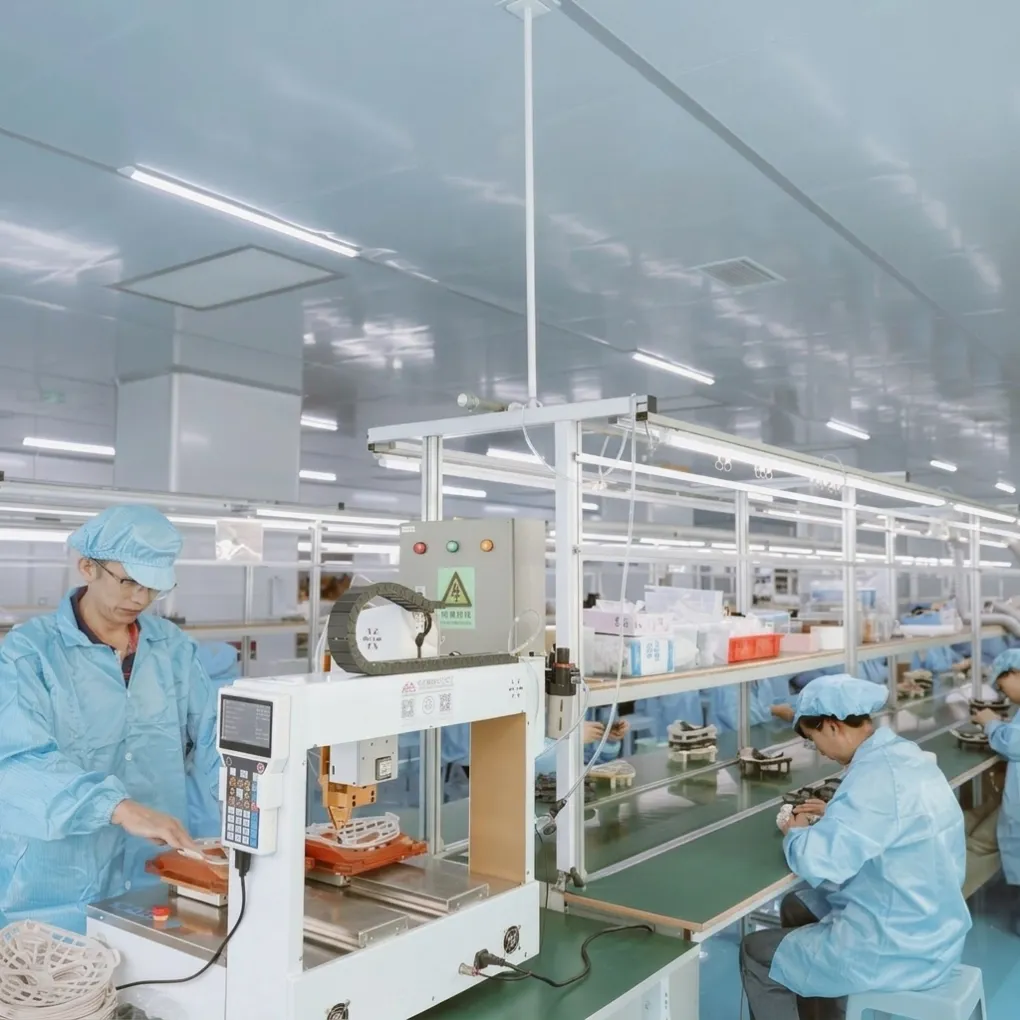
During a recent factory visit, a UK skincare brand was particularly impressed by the cleanliness and organization of our production workshop.
That feedback highlighted an important question:
Why does the production environment matter when manufacturing home-use beauty devices?
For products such as LED light therapy masks, eye care devices and other electronic beauty devices, manufacturing quality depends on much more than the final appearance of the product.
It starts with how the product is assembled, handled, inspected and packed.
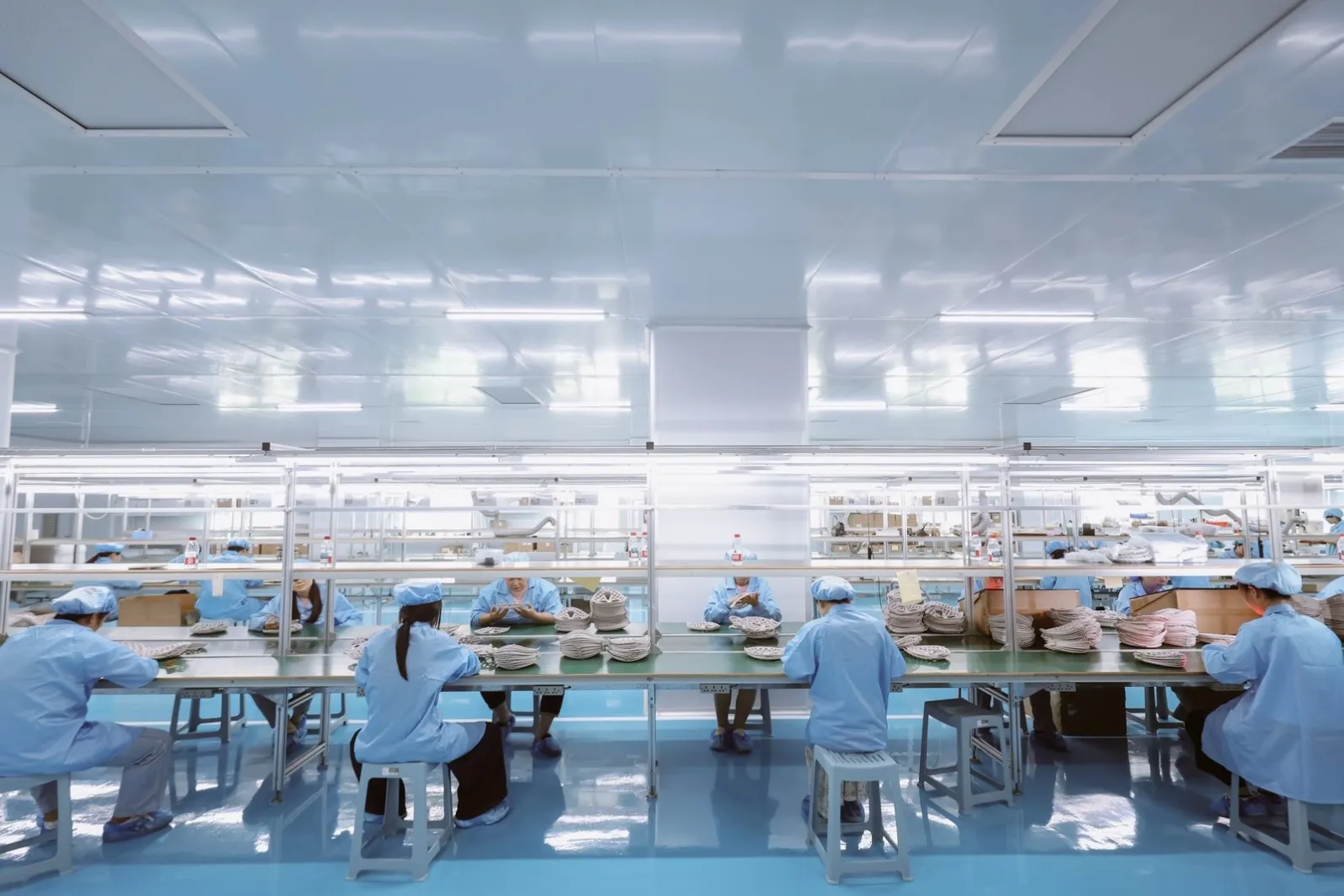
1. Beauty Devices Combine Electronics with Skin-Contact Components
A home beauty device is different from a simple consumer electronic accessory.
Many products contain multiple components such as:
Silicone parts + LED modules + PCB/FPC + electronic components + controllers + skin-contact structures
For an LED light therapy mask, for example, the customer ultimately sees a finished beauty product.
Inside the factory, however, that finished product has already passed through multiple assembly and inspection processes.
A cleaner and more organized production environment helps us manage these processes with greater consistency.
2. Cleanliness Matters During Product Assembly
Dust, debris and contamination are undesirable during the assembly of beauty devices—particularly when working with optical components, silicone surfaces and parts that users will wear close to the skin.
A controlled production environment helps reduce unnecessary exposure during assembly and handling.
For OEM buyers, this is something worth looking beyond the product sample itself.
A good sample tells you what a supplier can make.
The production environment helps you understand how they make it repeatedly.
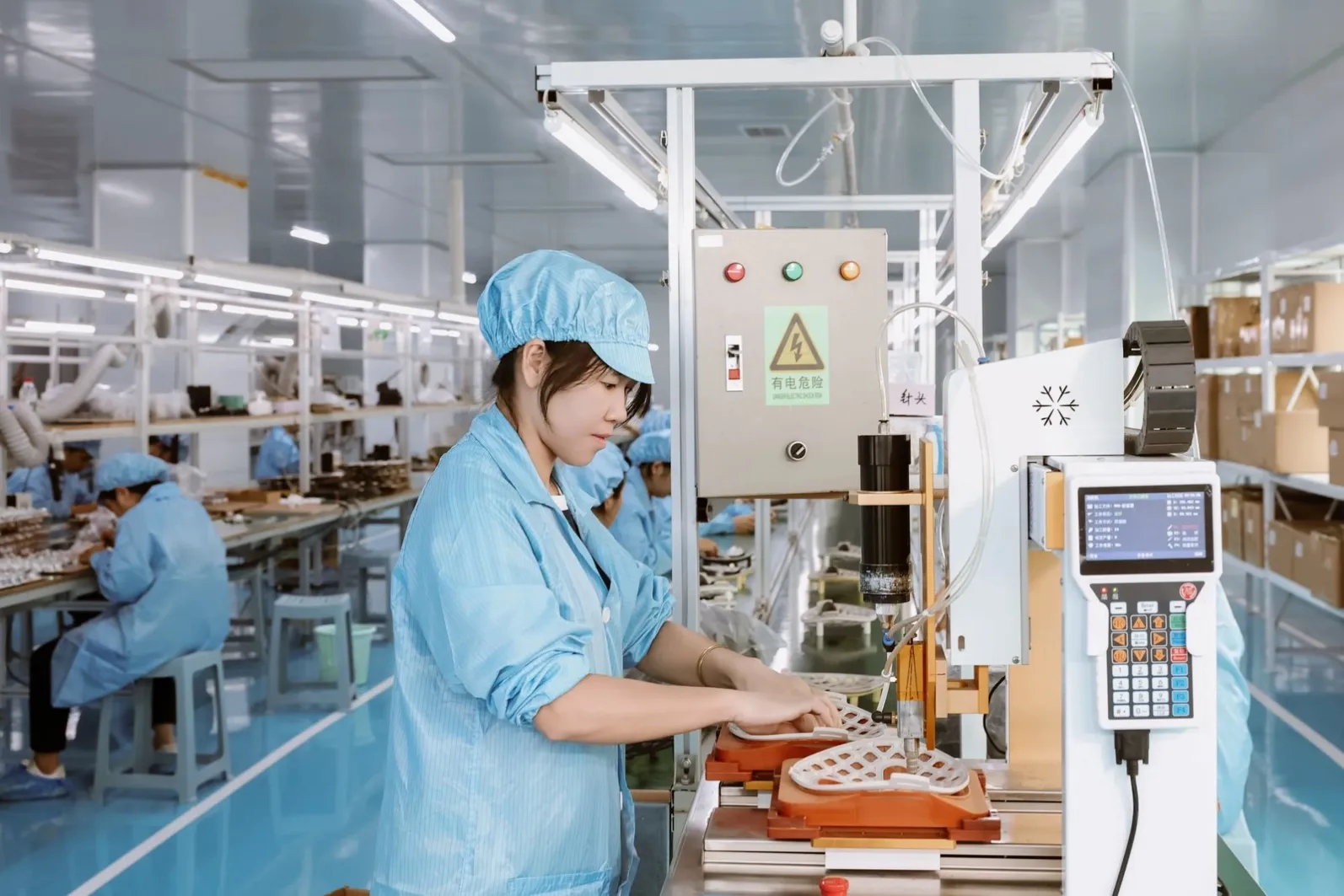
3. It Is Also About Process Control
A clean workshop should not simply look clean for a factory tour.
What matters is what happens inside it.
For home beauty device production, different stages may involve processes such as:
Component Preparation → Assembly → Electronic Connection → Functional Testing → Aging Test → Final Inspection → Cleaning → Packaging
Each stage should have defined procedures and quality checkpoints.
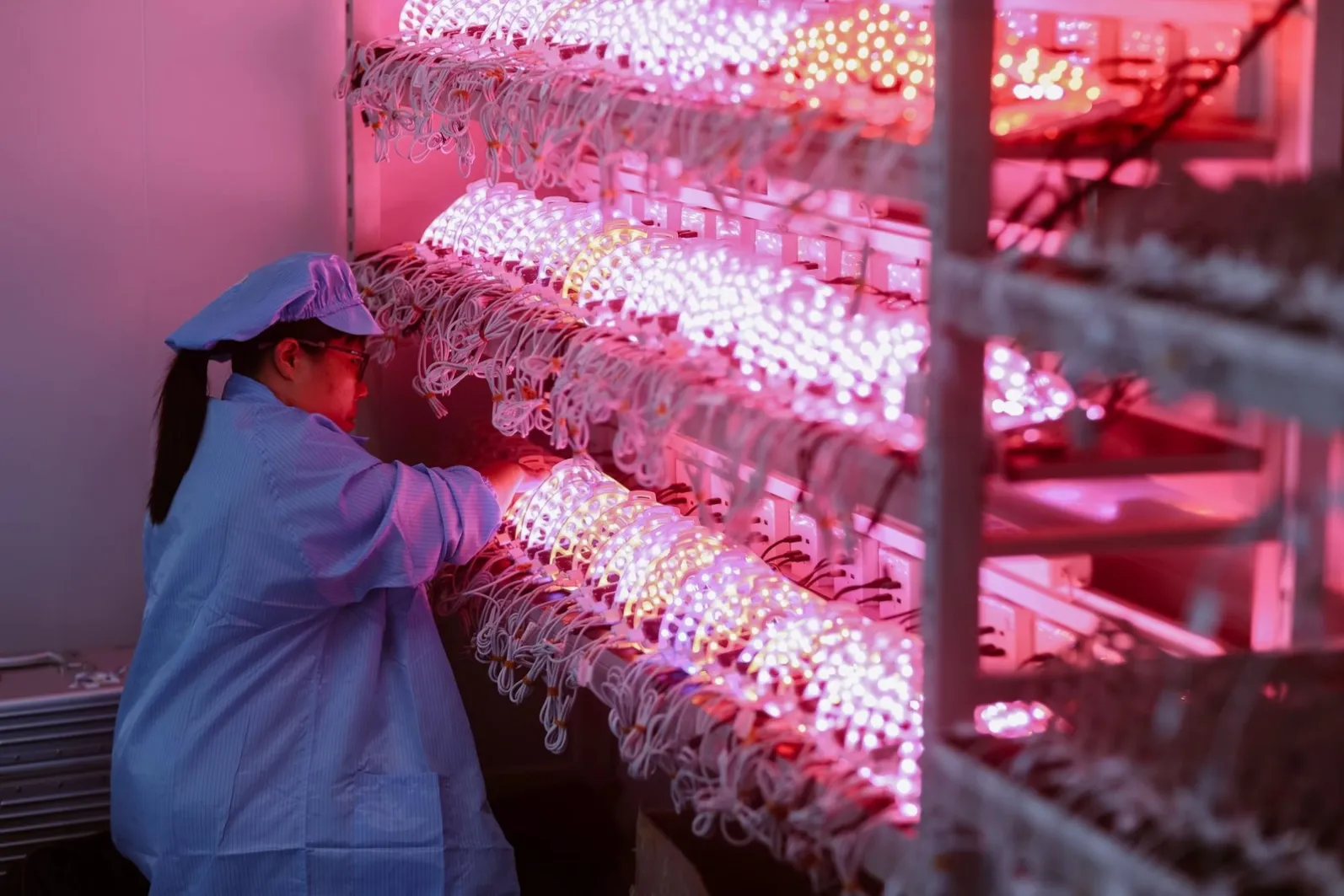
For LED beauty devices, inspection may also involve product-specific checks such as LED operation, controller connection, charging functions, timer functions and light-output testing.
This is why we see the production environment and QC process as parts of the same manufacturing system.
4. What Should an OEM Buyer Look for During a Factory Visit?
If you're visiting a potential home beauty device manufacturer, don't only look at the showroom.
Spend time in the actual production area.
Look at questions such as:
What to Check | Why It Matters |
|---|---|
Production Environment | How products and components are handled |
Workstation Organization | Helps indicate process discipline |
Assembly Procedures | Whether production follows defined steps |
QC Stations | Where and how products are inspected |
Testing Equipment | Whether key functions can be verified |
Aging Tests | How finished devices are checked before packing |
Packaging Area | How finished products are protected and prepared |
Traceability | How production and quality issues are managed |
A factory visit should help a buyer understand not only:
“Can this supplier make my product?”
but also:
“Can this supplier manufacture it consistently when my order moves from samples to mass production?”
5. From Sample Approval to Mass Production
This is particularly important for OEM/ODM projects.
A brand may begin with only one or two samples.
Once the product is approved, the next order could be hundreds or thousands of units.
The challenge then changes.
It is no longer only about creating one good sample. It becomes a question of production consistency.
That is why our manufacturing evaluation covers more than the finished appearance of the device.
Depending on the product, quality-control procedures can include checks for:
- LED operation
- controller functions
- timer functions
- charging connections
- product assembly
- aging performance
- irradiance
- cosmetic appearance
- packaging
The exact QC process varies according to the product and project requirements.
6. Why Factory Visits Matter for Private-Label Beauty Brands
Specifications can be sent by email.
Product photos can be viewed online.
Samples can be shipped internationally.
But a factory visit provides something different.
It allows a buyer to see the people, equipment, production environment and quality-control procedures behind the finished product.
This was one of the most valuable parts of our recent visit with a UK customer.
Their positive reaction to our clean production workshop reminded us that manufacturing capability is not only something to describe—it is something buyers should be able to see.
More Than a Product Supplier
For us, OEM/ODM beauty device manufacturing involves several connected areas:
Product Development
From existing product platforms to project-specific modifications.
Production
Assembly and manufacturing under controlled production procedures.
Quality Control
Functional testing and product-specific inspection before shipment.
Customization
Logo, color, packaging, functions and other OEM/ODM requirements depending on the project.
Supply Chain
Coordination of electronics, components, tooling and packaging for mass production.
The goal is to help brands move from:
Idea → Sample → Testing → Customization → Mass Production
with a clearer and more manageable manufacturing process.
Planning a Beauty Device Factory Visit in Shenzhen?
If you are sourcing an LED light therapy mask, eye care device, hair & scalp device or other home-use beauty device, a factory visit can be one of the most useful steps before starting a larger OEM/ODM project.
We welcome qualified brands, distributors and product-development teams to discuss their requirements and learn more about our production and QC processes.
Planning an OEM/ODM beauty device project?
FAQ
Why is a clean workshop important for beauty device manufacturing?
A clean and organized production environment helps manufacturers manage product assembly and handling more consistently, particularly for devices containing electronics, optical components and skin-contact parts.
What should I check when visiting a beauty device factory?
Buyers should look beyond the showroom and evaluate the production environment, assembly processes, QC stations, testing procedures, aging tests, packaging and overall workflow.
Can I visit your beauty device factory before placing an OEM order?
Factory visits can be arranged for qualified OEM/ODM projects. Buyers can use the visit to discuss product requirements and review relevant production and quality-control processes.
What beauty devices can be developed for private label?
Depending on the product platform and project requirements, OEM/ODM development may include LED light therapy masks, eye care devices, hair and scalp devices and other home-use beauty technologies.