Aug 29, 2026Technology
LED Face Mask Wavelength & Irradiance Customization | OEM Guide
Learn how LED face mask wavelengths, multi-chip LEDs and irradiance can be customized for OEM projects, including key design and safety considerations.
LED Face Mask Light Source Customization: Wavelengths, LED Chips & Irradiance Explained
For beauty brands developing a custom LED face mask, choosing the housing, color and logo is only part of the project.
The light system itself can also be customized.
Depending on the product platform and project requirements, brands may request different LED wavelengths, multi-chip combinations, light modes and irradiance levels.
However, increasing the number of wavelengths or simply asking for higher irradiance does not necessarily result in a better LED mask.
The light source needs to be considered together with the LED configuration, circuit design, treatment distance, treatment time and overall product architecture.
Here is what brands should know before starting an OEM LED face mask project.
1. Can LED Wavelengths Be Customized?
Yes.
For OEM/ODM projects, the LED light source can be configured according to the positioning of the product and the technical requirements of the brand.
Typical LED face mask configurations may include wavelengths such as:
- Red light
- Near-infrared (NIR)
- Blue light
- Yellow light
- Green light
Multiple wavelengths can also be integrated into a single LED package to create different treatment modes.
The exact combination depends on the LED package and mask architecture.
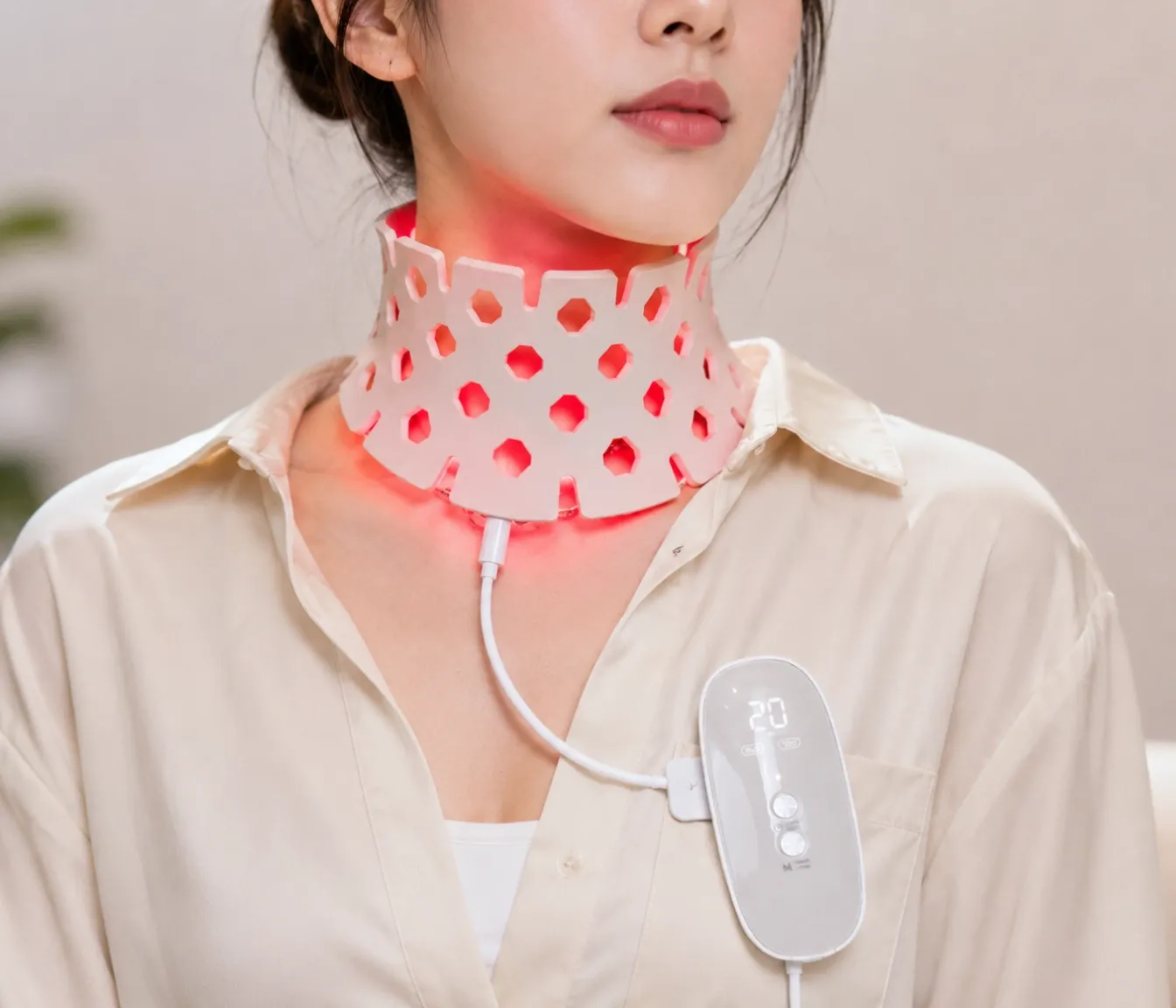
For example, our current platforms support:
Product Platform | LED Configuration |
|---|---|
Gen 1 LED Face Mask | Up to 4-chip LED |
LED Neck Device | Up to 5-chip LED |
Gen 2 LED Face Mask | Up to 5-chip LED |
For a fully customized LED light configuration, the typical MOQ starts from approximately 1,000 units, with a development lead time of approximately 45–60 days, depending on the project.
2. What Does “4-Chip” or “5-Chip” LED Mean?
This is worth explaining because many buyers may see terms such as 4-in-1 LED or 5-in-1 LED without knowing what they actually mean.
A multi-chip LED package integrates several LED chips into one LED bead.
For example, a customized LED package may combine several selected wavelengths within the same light source.
This makes it possible to develop different light modes without simply adding separate LEDs for every wavelength.
For OEM projects, the LED chip combination can therefore influence:
the available wavelengths → light modes → circuit design → power requirements → final irradiance
This is why wavelength customization should normally be evaluated during the product development stage rather than treated as a simple cosmetic change.
3. Can LED Face Mask Irradiance Be Customized?
Yes, but there are engineering limitations.
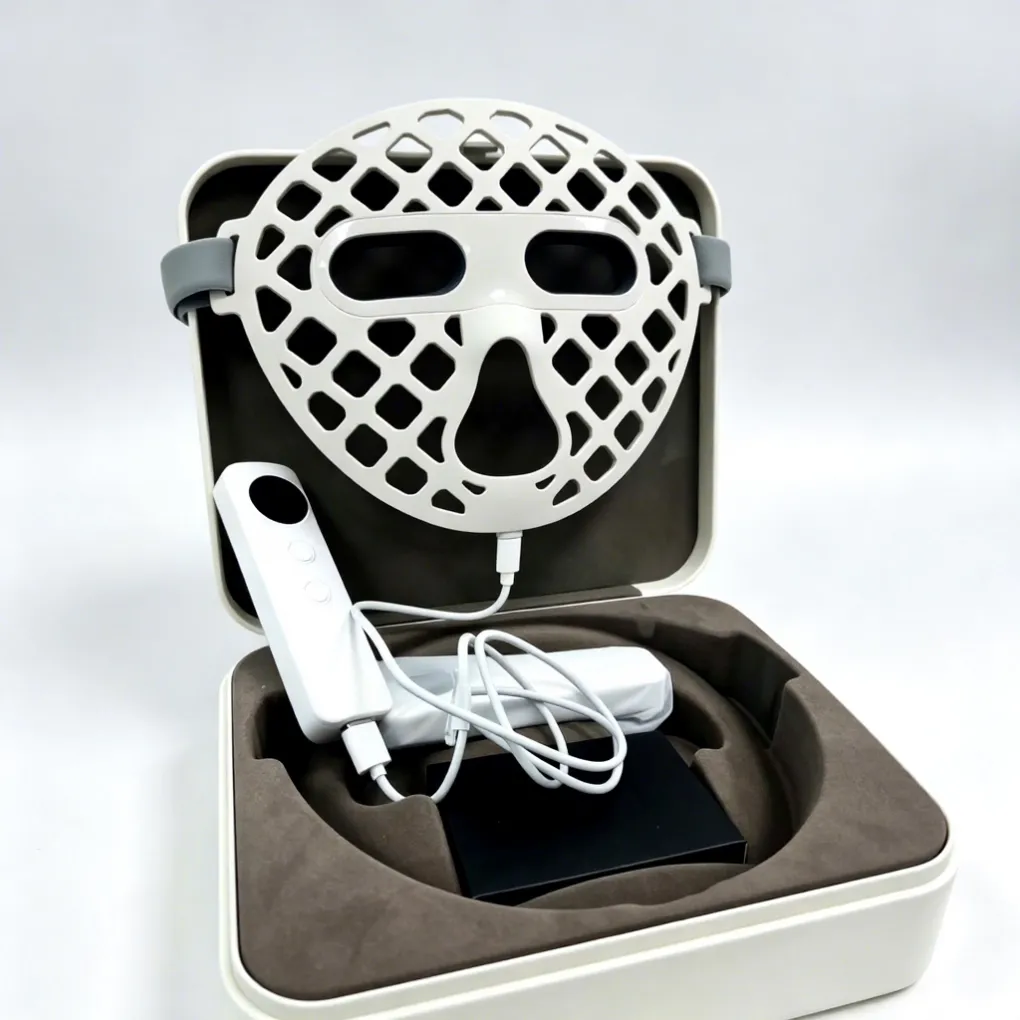
For a hollow-design LED face mask, available space and FPC circuit routing affect how much the irradiance can be increased.
There are generally two approaches.
Option 1 — Increase the Driving Power
Increasing power can raise the irradiance of the LEDs.
For our current hollow-mask platform, the red + near-infrared mode may increase by approximately 5 mW/cm² through power adjustment.
However, increasing power also increases the thermal load.
As a result, both the mask and controller may become slightly warmer during operation.
Option 2 — Use Higher-Output LED Chips
Another solution is to select larger or higher-output LED chips.
Depending on the LED configuration, this can increase the irradiance of the red + near-infrared mode by approximately 5–10 mW/cm².
This approach requires evaluation of the LED package, circuit design, power consumption and thermal performance.
4. Can Every Wavelength Use the Same Irradiance?
Not necessarily.
Different LED wavelengths and chips have different output characteristics.
Based on our current product architecture:
Red + NIR
Irradiance can be increased through power adjustment or LED-chip selection.
Blue
Higher output is technically possible, but we do not recommend increasing irradiance simply to achieve a higher specification number. The intended application and safe operating parameters should be evaluated first.
Yellow
Output adjustment is more limited by the LED chip itself. In our current configuration, the available increase is typically around 1–2 mW/cm².
Green
Higher output can be achieved depending on the selected LED configuration.
Therefore, when developing a multi-wavelength LED face mask, it is not always appropriate to specify the same target irradiance for every wavelength.
5. Is Higher Irradiance Always Better for an LED Face Mask?
No.
This is one of the most important points for brands developing LED beauty devices.
A higher
mW/cm² number may look impressive on a specification sheet, but irradiance alone does not determine the quality of an LED mask.The actual light exposure is also affected by factors such as:
Irradiance × Treatment Time × Distance
For example, the distance between the LEDs and the skin can significantly influence the amount and distribution of light reaching the treatment area.
Treatment duration and intensity level also matter.
Therefore, instead of asking:
“Can you make the irradiance as high as possible?”
A better question is:
“What irradiance, treatment distance and treatment time are appropriate for this product design?”
For OEM development, our goal is not simply to maximize one specification. The light source, electrical system, thermal performance and treatment parameters should work together within appropriate operating limits.
6. Why LED-to-Skin Distance Matters
Two LED masks can use similar LEDs but deliver different light distributions because their physical structures are different.
The distance between the LED and the skin can influence:
- irradiance measured at the treatment surface
- light distribution
- coverage uniformity
- thermal experience
- treatment design
This is particularly important when comparing a flat silicone mask, 3D structured mask and hollow LED mask.
For this reason, brands comparing OEM LED masks should not evaluate LED count or irradiance in isolation.
The complete optical and structural design matters.
7. What Should a Brand Specify for a Custom LED Mask?
Before requesting a quotation for a custom light-source configuration, it helps to provide the following information:
- Target wavelengths
- Preferred wavelength combination
- Required light modes
- Target irradiance, if specified
- Treatment time
- Intensity levels
- Target market
- Expected order quantity
- Existing product specification or reference product
- Any specific testing or regulatory requirements
If the brand does not yet have a finalized optical specification, we can also evaluate the requirements based on the intended product positioning and existing LED mask platform.
8. Customization Is More Than Adding Another Light Color
For an OEM LED face mask project, adding another wavelength may affect much more than the color users see.
It can influence:
LED package → FPC layout → controller → power consumption → thermal performance → light modes → testing
That is why deeper wavelength customization typically requires a higher MOQ and longer development cycle than standard logo, color or packaging customization.
For projects requiring a custom LED configuration, our typical starting quantity is approximately 1,000 units, with an estimated development lead time of 45–60 days, subject to final technical requirements.
FAQ
Can I customize the wavelengths of an OEM LED face mask?
Yes. Depending on the LED mask platform, different wavelengths and multi-chip LED combinations can be evaluated for OEM/ODM projects.
What is a multi-chip LED in an LED therapy mask?
A multi-chip LED integrates several LED chips into one LED package, allowing multiple wavelengths or light modes to be incorporated into the same product.
Can the irradiance of an LED face mask be customized?
Yes. Irradiance may be adjusted through driving power, LED-chip selection and other design changes, subject to the limitations of the circuit, thermal design and product structure.
Is higher irradiance better for red light therapy masks?
Not necessarily. Irradiance should be considered together with treatment distance, treatment duration, light distribution and the overall product design.
Can red and near-infrared light be used together?
A multi-chip LED configuration can be designed to operate selected wavelengths together, depending on the LED package and controller design.
What is the MOQ for custom LED wavelengths?
For deeper light-source customization, our typical MOQ starts at approximately 1,000 units, depending on the required LED configuration and development work.
How long does custom LED mask development take?
A custom light-source project typically requires approximately 45–60 days, depending on wavelength selection, LED configuration, circuit changes, testing and other requirements.
Developing a Custom LED Face Mask?
Whether you already have a detailed wavelength and irradiance specification or are still comparing different LED configurations, we can evaluate the project based on your target market, product positioning and technical requirements.
Send us your target wavelengths, light modes, irradiance requirements and expected order quantity to discuss your OEM/ODM LED face mask project.